Internal Grinding Machine

Internal Grinding Machine

Price 450000 INR/ Unit

MOQ : 1 Unit

Internal Grinding Machine Specification

  • Rotation
  • Right Hand
  • Type
  • Industrial Grinding Machine
  • Capacity
  • Standard Ltr
  • Weight (kg)
  • 1250 kg Kilograms (kg)
  • Computerized
  • No
  • Automatic
  • No
  • Control System
  • Manual
  • Table Size
  • 120 x 340 mm
  • Magnetic Chuck Size
  • 100 mm
  • Grinding Wheel Size
  • 200 x 20 x 31.75 mm
  • Grinding Wheel Speed
  • 2800 rpm km/m
  • Grinding Length
  • 125 mm
  • Floor Space
  • 1200 x 900 mm
  • Fuel Tank Capacity
  • 50 liters (Coolant tank) Cubic Yard (yd3)
  • WorkingSpeed
  • Variable
  • Spindle Speed
  • 12000 rpm km/m
  • Power
  • 2 HP Biot ( Bi)
  • Voltage
  • 415 V Teraampere (TA)
  • Dimension (L*W*H)
  • 1400 x 1200 x 1700 mm Yard
  • Feature
  • High precision finishing, Rigid construction, Durable drive system
  • Color
  • Light Grey / Blue
  • Lubrication
  • Centralized manual
  • Grinding Accuracy
  • 0.002 mm
  • Surface Finish
  • Ra 0.2 micron
  • Max Workpiece Diameter
  • 150 mm
  • Main Motor
  • 1.5 kW
  • Applications
  • Automotive, Bearing, Tool Room, Aerospace
  • Coolant System
  • Included
  • Max Workpiece Length
  • 200 mm
  • Noise Level
  • Below 75 dB
 

Internal Grinding Machine Trade Information

  • Minimum Order Quantity
  • 1 Unit
  • Main Export Market(s)
  • Asia, Australia, Central America, North America, South America, Eastern Europe, Western Europe, Middle East, Africa
  • Main Domestic Market
  • All India
 

About Internal Grinding Machine

A specialised machine tool used to grind the internal surfaces of cylindrical workpieces is an internal grinding machine. It is made to grind a workpiece's inner diameter in order to get exact measurements, a smooth surface, and the right form.

Here are some salient characteristics and ideas of internal grinding machines:

1. Internal grinding machines remove material from a workpiece's interior surface using a spinning abrasive wheel or grinding spindle. To aid in the grinding operation, the workpiece is rotated or moved axially while being held in place by a chuck or collet.

2. Internal grinding machines are renowned for their capacity to reach high standards of precision and accuracy. They are able to achieve smooth finishes and exact geometries while grinding the inside surfaces to close tolerances.

3. Internal grinding machines can be configured in a variety of ways, including manually, semi-automatically, and entirely. They can be operated manually by knowledgeable people or made easier to use by incorporating automation technology.

4. Applications for inside Grinding: The inside surfaces of cylindrical workpieces, such as bores, holes, and tubes, are frequently ground using internal grinding equipment. They are frequently employed in sectors including precision engineering, the medical field, aerospace, and the car industry.

5. Choosing the right grinding wheel is essential to getting the desired grinding results. Depending on the material being ground and the desired level of surface polish, various abrasive compounds, grit sizes, and bonding agents are utilised.

6. Internal grinding machines with specialised capabilities can carry out tasks including contour grinding, deep hole grinding, and bore honing. These procedures make it possible to create intricate interior geometries and produce specified surface finishes.

When performing precision machining procedures that call for the grinding of inside surfaces, internal grinding machines are a need. They provide accuracy, adaptability, and the capacity to produce precise finishes and tight tolerances. Depending on the brand and model, an internal grinding machine's exact characteristics and capabilities may change. 

FAQ 

1. What is a machine for internal grinding?

Ans - The internal surfaces of cylindrical objects are ground using a machine tool called an internal grinding machine. It offers a high degree of precision and accuracy in grinding operations and is utilised in a range of industries, including the automotive, aerospace, and medical ones.

2. What advantages can internal grinding machines offer?

Ans - The ability of an internal grinding machine to produce extremely fine surface finishes on parts, which are crucial for specific applications, is its most notable advantage. It is also more accurate than High-Speed-Steel (HSS) cutters, and because to its tiny size, it is simple to work with smaller amounts of material.

3. Can an internal grinding machine handle different kinds of materials?

Ans - Steel, aluminium, brass, copper, and plastic are just a few of the materials that an internal grinding machine can work with.

4. What safety measures should be taken when using an internal grinding machine?

Ans - Safety goggles, gloves, and any other protective gear the manufacturer may prescribe should be used when utilising an internal grinding machine. It's also crucial to confirm that all the protections are installed and adjusted correctly. Additionally, all moving machine parts must be kept away from hands and other body parts.

5. What internal grinding machine types are there?

Ans - There are numerous configurations for internal grinding machines, including centerless, through-feed, end-feed, and multiple-disc layouts. Additionally, manual and CNC variants are readily accessible. 
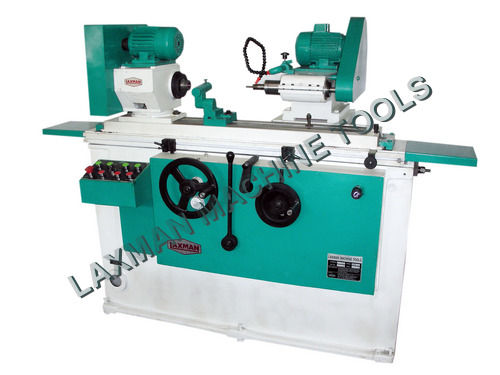


Precision Grinding for Demanding Applications

This internal grinding machine excels in delivering ultra-precise results, thanks to meticulous engineering and a rigid design built from cast iron. Its high-accuracy output (0.002 mm) and premium surface finish make it perfect for applications where exact tolerances are essential, such as component production for the automotive and aerospace sectors.


User-Friendly Manual Control System

Operators will appreciate the intuitive manual control system, which offers straightforward operation without the complexity of CNC programming. The centralized manual lubrication and accessible controls help streamline the operation and maintenance process, allowing you to focus on precision grinding tasks with confidence.


Durability and Safe Working Environment

Equipped with a powerful drive system and high-quality construction materials, the machine withstands rigorous, prolonged use typical of industrial settings. With noise levels kept below 75 dB and ergonomic design considerations, it promotes a safer, quieter, and more comfortable workplace for operators.

FAQs of Internal Grinding Machine:


Q: How does the internal grinding machine achieve high precision and surface finish?

A: The machine is built with a cast iron body, hardened steel guides, and operates with V and flat guideways, ensuring stability and minimal vibration during grinding. This rigid construction, combined with its 1.5 kW motor, precision spindle, and grinding wheel running at 2800 rpm, enables it to consistently deliver grinding accuracy of 0.002 mm and a surface finish of Ra 0.2 micron.

Q: What types of workpieces and industries commonly use this grinding machine?

A: It is designed for internal grinding of steel, hardened metals, and alloys, with a maximum workpiece diameter of 150 mm and length of 200 mm. Typical applications include producing components for automotive, bearing, aerospace sectors, and precision tool rooms where reliable high precision is required.

Q: When should I use the integrated coolant system during operation?

A: The included coolant system, with a 50-liter tank, should always be used during grinding to reduce heat buildup, minimize tool wear, and maintain consistent surface quality. The system is especially crucial for extended grinding sessions and when working with sensitive materials or tight tolerances.

Q: Where can this grinding machine be installed, and what are its spatial requirements?

A: Thanks to its compact floor space requirement of 1200 x 900 mm and manageable weight of 1250 kg, it can be installed in most industrial workshops, tool rooms, or manufacturing floors. Adequate provisioning for voltage (415 V) and proper ventilation should be ensured for safe and efficient operation.

Q: What is the process for lubrication, and how does it ensure machine longevity?

A: This model features a centralized manual lubrication system, making it easy to apply lubricant to all critical moving parts. Regular lubrication reduces friction and wear, extending the lifespan of the guides, spindle, and table slideways, thereby maintaining high level of precision over time.

Q: How does the machines manual control benefit operators compared to CNC models?

A: Manual control offers operators direct interaction with the machine, simplifying setup and adjustments without the need for CNC programming skills. This approach is ideal for custom jobs, prototypes, and environments where flexibility and intuitive operation are prioritized over automation.

Tell us about your requirement
product

Price:

Quantity
Select Unit

  • 50
  • 100
  • 200
  • 250
  • 500
  • 1000+
Additional detail
Mobile number

Email


Back to top
